
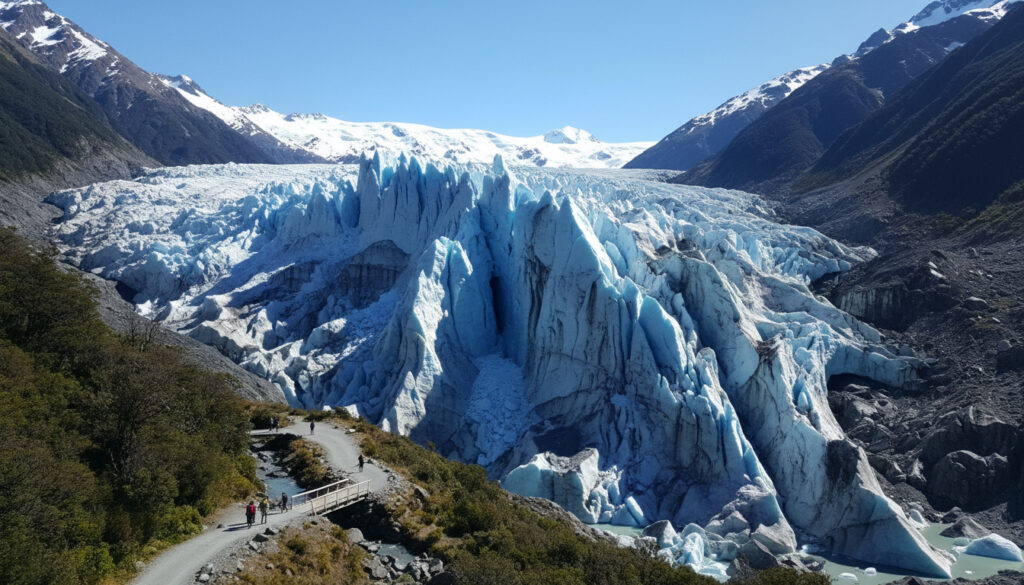
Franz Josef Glacier descends through Westland Tai Poutini National Park on New Zealand’s South Island, dropping to just 240 metres above sea level amidst temperate rainforest. This unique geographic positioning makes it one of the world’s most accessible glaciers, though rapid environmental changes have transformed how visitors experience the ice in recent years.
Once reachable by foot from the valley floor, the glacier now requires helicopter access for direct ice contact due to sustained retreat. The Franz Josef Glacier Guides, operating under Ngāi Tahu Tourism, hold exclusive landing rights on the upper icefall, offering guided heli-hikes across constantly shifting terrain marked by crevasses and ice caves.
Annual visitation exceeds 500,000 travellers, drawn by the glacier’s status as the fastest-moving commercially guided icefield globally. However, climate change projections and dynamic weather patterns on the West Coast introduce daily uncertainties that shape every expedition.
Where Is Franz Josef Glacier and How to Get There?
Situated on the West Coast of the South Island, Franz Josef Glacier sits at coordinates 43.96°S 170.18°E within the Southern Alps. The glacier terminates approximately 5 kilometres from the township of Franz Josef, accessible via State Highway 6.
Location
Westland Tai Poutini National Park, West Coast, NZ
Length
Approximately 10km (retreating)
Access
SH6 by road; helicopter to ice
Status
Open; climate-impacted
Drivers reach the glacier base via a sealed road terminating at the Glacier Base on Cron Street in Franz Josef township. From Queenstown, travellers can book full-day packages combining fixed-wing flights over the Southern Alps with heli-hikes, departing Queenstown Airport around 8:30am for a 7.5-hour total duration.
Key Insights
- The glacier descends to 240 metres above sea level, among the lowest glacier elevations globally.
- Vehicle access reaches only the valley floor; helicopter transport is now required for ice contact.
- The fastest-moving commercially guided glacier worldwide, advancing up to 1 metre daily during active phases.
- Annual retreat rates have averaged 30 metres per year since 2011.
- Visitor numbers exceed 500,000 annually to the wider glacier region.
- Exclusive landing rights mean all ice hikes require Franz Josef Glacier Guides operations.
- Queenstown connections provide 60-minute scenic flights each way via the Southern Alps.
Essential Facts
| Coordinates | 43.96°S 170.18°E |
| Elevation (Terminal) | 240m above sea level |
| Elevation (Upper) | Up to 3,000m |
| Approximate Length | 10km (currently retreating) |
| Annual Visitors | ~500,000 |
| Average Retreat Rate | 30m/year (2011-present) |
| Helicopter Access | Exclusive to Franz Josef Glacier Guides |
| Minimum Tour Age | 10 years |
| Distance from Queenstown | ~350km by road; 60min flight |
| Tour Base Address | 63 Cron Street, Franz Josef |
Best Franz Josef Glacier Tours and Activities
Direct ice access requires helicopter transport, with Franz Josef Glacier Guides holding sole operational rights to land on the upper icefall. Their heli-hike programmes accommodate varying fitness levels and time constraints, from brief encounters to full-day climbing excursions.
Heli-Hiking on the Ice
The flagship Glacier Heli Hike spans four hours total, including approximately 2 to 2.5 hours of guided ice walking. Participants explore blue ice formations, crevasses, and ice caves that shift location between tours. The experience includes safety briefings, helicopter transfers, and technical equipment—crampons, boots, and ice axes.
Guides assess conditions daily, potentially restricting access to certain areas based on real-time glacier stability. No prior climbing experience is required, though moderate fitness is essential for navigating uneven ice terrain.
Alternative Glacier Experiences
The Glacier Encounter offers a shorter one-hour total experience with roughly 15 minutes on the ice, suitable for visitors seeking a brief introduction without strenuous exertion. For advanced adventurers, the Glacier Heli Ice Climb extends to eight hours with 5.5 hours on the ice, catering to novice through expert climbers with tailored instruction.
Ground-based Guided Walks operate through Rainforest Retreat, exploring the valley floor and terminal moraine without helicopter access. These walks provide historical context and views of the glacier terminus from a distance.
Queenstown Departures
Travellers based in Queenstown can book comprehensive day packages valid through September 2026. These combine fixed-wing flights—60 minutes each way with guaranteed window seats—with the standard heli-hike experience. Total duration reaches 7.5 hours including transfers, departing approximately 8:30am from Queenstown Airport.
All ice hikes include specialised gear: crampons, alpine boots, and ice axes. Tours depart from 63 Cron Street. Check-in 15 minutes prior to departure is mandatory. Free cancellations apply if weather conditions force cancellations.
Franz Josef Glacier Current Status and Retreat
Franz Josef holds the distinction of being the fastest-moving commercially guided glacier worldwide. This rapid flow—up to one metre daily during surges—creates constantly changing features including seracs, arches, and caves that may disappear within weeks.
Climate Change and Retreat Patterns
Since 2011, the glacier has entered a sustained retreat phase, losing an average of 30 metres annually from its terminus. While 2008 marked a record advance, subsequent years have seen the ice pull back significantly, necessitating helicopter landings higher on the icefall where surface accumulation remains viable.
Current conditions remain open for tours into 2026, though daily accessibility varies. The Department of Conservation (DOC) oversees access protocols, emphasising that unguided travel on the glacier is prohibited due to hidden crevasses and avalanche risks.
Comparison with Fox Glacier
Located 25 kilometres south, Fox Glacier offers similar heli-hiking experiences through separate operators. Both glaciers descend into rainforest and face comparable climate pressures. However, Franz Josef’s exclusive guiding arrangement and documented status as the fastest-moving glacier differentiate it for visitors prioritising dynamic ice features. Comparative analyses note that while Fox provides alternative access, Franz Josef’s icefall changes more dramatically between visits.
No two hikes are identical. Features mentioned in reviews—specific ice caves or arches—may vanish between tours. Guides continuously reassess routes, and children under 10 are prohibited from ice hikes regardless of fitness.
Planning Your Visit: Best Time, Weather and Tips
Operations run year-round, though the West Coast’s notorious weather variability affects daily tour viability. Summer months (December through February) provide milder conditions and longer daylight hours, while winter offers clearer atmospheric conditions for helicopter flights.
Accommodation and Luxury Stays
The township offers options ranging from backpacker lodges to luxury retreats. Te Waonui Franz Josef, a five-star rainforest lodge, provides wellness centres and fine dining tailored to heli-hike guests. Rainforest Retreat offers guided valley walks departing directly from the property.
Safety and Preparation
Moderate fitness is required for all ice activities. Visitors should wear layered clothing suitable for alpine conditions and apply sun protection—UV reflection off ice intensifies exposure. Safety briefings cover crevasse hazards and proper equipment use.
Sun protection extends beyond sunscreen. When exploring surrounding rainforest trails, a Wide Brim Hat – Best for UV Protection and Style 2025 provides essential coverage during non-glacier activities.
West Coast weather changes rapidly. Tours cancel when safety thresholds are exceeded, with full refunds typically offered. Check local forecasts the morning of departure, but prepare for rain regardless of initial predictions.
Timeline: From Discovery to Modern Tourism
- 1865: Geologist Julius von Haast names the glacier after Emperor Franz Joseph I of Austria during his exploration of the West Coast.
- 2008: The glacier reaches a record advance position, extending close to the valley floor visitor access points.
- 2011: Retreat phase begins, with the terminus pulling back from previous maximum positions.
- Present: Helicopter-dependent access established as standard; tours confirmed operational through September 2026.
Established Facts and Remaining Questions
Confirmed Information
- DOC manages access; unguided travel prohibited
- Franz Josef Glacier Guides hold exclusive heli-hike landing rights
- Minimum age requirement: 10 years
- Fastest-moving commercially guided glacier globally
- Year-round operations subject to daily weather assessment
Variable or Uncertain
- Exact current length (continuously changing due to retreat)
- Specific 2024-2025 melting rates (data pending NIWA annual report)
- Daily route accessibility (determined morning-of by guides)
- Long-term viability of current landing sites
Geological and Cultural Context
Formed during the last ice age, Franz Josef Glacier descends from the Southern Alps through temperate rainforest—a rare combination globally. The glacier’s rapid flow rate, driven by high snowfall accumulation in the névé, contrasts with its current retreat driven by terminal melting exceeding ice replenishment.
Ngāi Tahu Tourism’s stewardship through Franz Josef Glacier Guides reflects the glacier’s significance to Māori, who know the area as Kā Roimata o Hine Hukatere (The Tears of Hine Hukatere). This cultural dimension underscores the site’s importance beyond tourism metrics.
Expert Perspectives
The glacier’s dynamics require us to treat every day as unique. What existed yesterday—a perfect ice cave or accessible arch—may be gone tomorrow. This is the nature of guiding on the fastest-moving glacier we have.
— Franz Josef Glacier Guides operational briefing
The Department of Conservation maintains that guided access remains the only safe method of ice exploration, citing the presence of hidden crevasses and active icefall zones. Tour operators undergo regular safety audits to maintain concession rights.
Summary and Next Steps
Franz Josef Glacier offers a rare opportunity to experience active glaciation within a rainforest setting, though climate change has shifted access models toward helicopter-dependent experiences. Visitors should book heli-hikes through the exclusive operator, confirm weather-dependent contingencies, and prepare for moderate physical exertion. After your expedition, consider relaxing with Home Ice Cream – Easy No-Churn Recipes and Tips for a cool dessert fitting the alpine theme.
Frequently Asked Questions
Is Franz Josef Glacier worth visiting in 2025?
Yes. The glacier remains open for tours through September 2026, offering unique access to rapidly changing ice features. While retreat continues, helicopter landings provide intimate glacier experiences unavailable elsewhere.
Can children participate in glacier tours?
Participants must be at least 10 years old for all heli-hike and ice climb programmes. Guides may impose additional restrictions based on daily conditions and individual fitness assessments.
What should I wear for a heli hike?
Layered alpine clothing is essential. Operators provide crampons, boots, and ice axes. Bring sunglasses, sunscreen, and a camera. Rain jackets are recommended regardless of morning forecasts.
How does weather affect tour operations?
West Coast weather changes rapidly. Operators cancel tours when safety thresholds are exceeded, offering free rescheduling or refunds. Summer provides milder hiking conditions, though rain remains possible year-round.
What accommodation options exist near the glacier?
Options include the five-star Te Waonui rainforest lodge, Rainforest Retreat with guided walk access, and various township accommodations within walking distance of the Glacier Base at 63 Cron Street.
Can I visit without a helicopter?
Ground-based guided walks explore the glacier valley and terminal moraine, but direct ice contact requires helicopter transport due to retreat. DOC prohibits unguided ice access due to crevasse hazards.
Are there fitness requirements for ice hikes?
Moderate fitness is required for navigating uneven ice and altitude changes. Participants should be able to walk comfortably for 2-3 hours over uneven terrain. No prior climbing experience is necessary for standard heli-hikes.
Related stories



Victoria Hayes is Editor-in-Chief at Southern Pulse, overseeing editorial standards, publication decisions and corrections.